

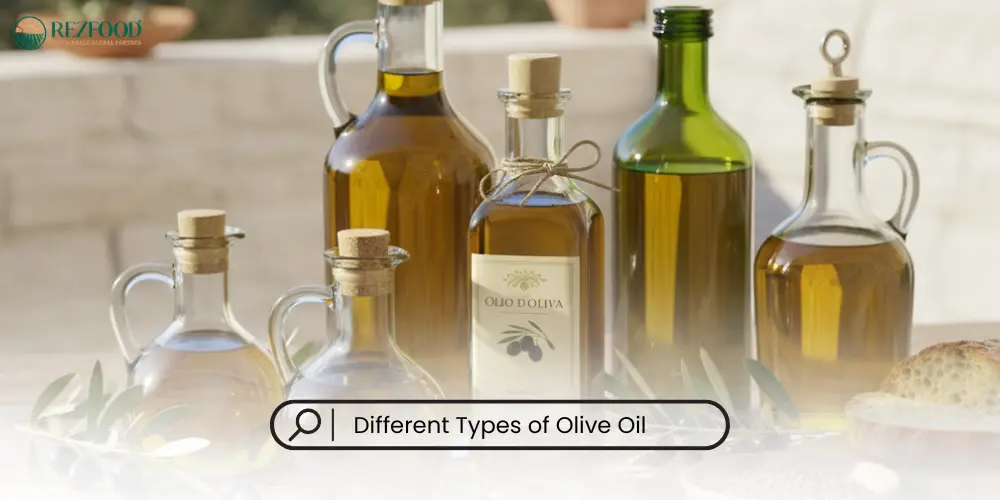
Each grocery store has different types of olive oil on its shelves, and for many people, deciding which oil to purchase can be a challenge. “Extra Virgin”, “pure”, “virgin”, and “light” can be confusing and, at times, misleading. Choosing the right olive oil for cooking, considering one’s health, and the amount of money one is willing to spend requires an understanding of the different types of olive oil. Each one has its own qualities, whether it be the flavor, the nutritional value, or the best use of it in one’s cuisine.
This guide aims to explain the different types of olive oil in a straightforward manner. Each grade is assumed to be a different approach to oil extraction, and we will discuss which is best suited for which use. In this guide, we will break down the differences between refined and unrefined oils and also discuss the reasoning behind oil grades. As you finish this guide, we hope you can seamlessly and easily access the oil section in any store and you will understand the many types of olive oil grade and which type is best suited for any occasion.
Difference between refined and unrefined olive oil
The first and foremost distinction is that between refined and unrefined olive oil and how this main distinction accounts for classifying olive oils into varying degrees of quality, taste, and nutritional value. Unrefined olive oils are produced through mechanical extraction without the application of heat and without the use of chemical solvents.
For this reason, there are no extrusions or bleaching of the oil, and the processing of the oil is as natural as possible. Unrefined olive oil, which includes extra virgin and virgin olive oils, is truly ‘natural’ oil as all of the complex flavors and aromas, and the full range of nutritional constituents in the form of powerful antioxidants and polyphenols, are retained.
Refined olive oils, on the other hand, are oils of lower quality and contain defects which are made to pass through industrial processes of refining that use destructive heat and chemical solvents to increase the value of the oil and remove the unpleasant flavors and aromas. Though the oil is made to pass industrial standards, the integrity of the oil is damaged as the oil is bleached and the nutritional value is greatly diminished.
Being able to differentiate between refined and unrefined olive oil is essential to determine whether you are purchasing a natural and tasty product or a neutral and artificially refined fat.
A Guide to Unrefined Olive Oils: Extra Virgin and Virgin
Unrefined oils are the highest quality with Extra Virgin and Virgin being the benchmark. This guide to unrefined olive oils:
Extra virgin and virgin will familiarize you with these high quality, natural products.
- Extra Virgin Olive Oil (EVOO): This is the olive oil grade. To be classified as extra virgin an oil has to be extracted without the aid of chemicals, have an ideal taste and aroma with no negative aspects, and have a free acidity level of less than 0.8%. The higher the quality, the more robust the flavor and the more health benefits the olive oil contains. This is the oil to choose when you want the flavor to be a star component of your dish.
- Virgin Olive Oil: While this is the next grade, it is still an unrefined high-quality product. It is still produced solely through mechanical means. The only difference is the inclusion of very minor off-flavor and an increased free acidity level of 2.0%. It will have an enjoyable, pleasant olive taste, although it is usually more subdued than the taste of an extra virgin olive oil.
The outlines provided with respect to unrefined olive oils have been constructed for those who appreciate unrefined natural taste and quality.
Understanding refined olive oils: Pure, light, and pomace oil
The more processed and cost-effective options available are labelled “refined” oils. This guide will help clarify what ‘refined’ olive oils: Pure, light, and pomace oil means.
- “Olive Oil” or “Pure Olive Oil”: This grade is very common. It is a blend made mostly of refined olive oil, with a very small amount of virgin or extra virgin olive oil added (about 5-15%) just for some olive flavor and color.
- “Light” or “Extra Light” Olive Oil: This is among the most confusing labels. “Light” is referring only to the oil’s very pale color and neutral flavor, not to the calorie or fat content. All olive oils are equal in calories. This is a highly refined oil and is excellent for high-heat cooking or baking, where you want to remove the olive taste.
- Lowest Grade: Olive Pomace Oil. It is extracted after the first pressings using chemical solvents, high heat, and inversion techniques on the pulped, pit, and skin leftovers (the “pomace”). It is still considered and referred to as an inferior quality edible olive oil, and must be refined to be edible.
Being able to identify the characteristics of refined olive oils helps you understand what you are purchasing at varying costs.
Which type of olive oil is best for your needs?
With all this information, the final question is which oil to buy. This guide to which type of olive oil is best for your needs? will help you match the right oil to the right task in your kitchen. There is no single “best” oil for everything; the ideal choice depends entirely on what you are doing.
For your pantry, have two kinds: a high-quality extra virgin olive oil for flavor and finishing, and a cheaper regular olive oil or a virgin olive oil for all-purpose cooking. This way, you always have the right one for the job. When you understand all the different grades, it is simpler to decide what type of olive oil best suits your needs.
| Type of Olive Oil | Key Characteristics | Best For |
| Extra Virgin | Robust flavor, fruity, high in antioxidants. | Salad dressings, drizzling over finished dishes, dipping bread. |
| Virgin | Good olive flavor, slightly milder than EVOO. | General low-to-medium heat cooking, roasting, marinades. |
| “Pure” Olive Oil | Very mild flavor, higher smoke point. | An all-purpose cooking oil for sautéing and roasting. |
| “Light” Olive Oil | Completly neutral flavor, high smoke point. | High-heat frying, baking where no oil flavor is desired. |
How is olive oil graded? The role of acidity
The grade of an olive oil is derived from chemical compositions and the sensory evaluation of a trained tasting group. How is olive oil graded? The role of acidity is explained in an olive oil chemistry analysis and evaluation. Free fatty acidity is the official measure and directly correlates to the quality of the olives at crushing. The quality of untreated olives of very low free fatty acids and any olive oil subsequent to processing is an indication of a high performing, quick processing, and healthy harvesting.
When olives are poorly stored or damaged, the pulp starts to ferment, and the oil within them begins to decompose, thus increasing the acidity levels. Therefore, extra virgin olive oil needs to have very low levels of acidity, less than 0.8%. Whereas, virgin olive oil can have an acidity up to 2.0%. Any oil with an acidity higher than that is classified as “lampante.” Understanding how this oil is graded and the role acidity plays is crucial, given that it helps you comprehend the quality of the oil even before it has been packaged.
Does the Color of Olive Oil Indicate Its Quality?
There is and abundantly continues to be a false belief held by members of the general public that the particular color of an olive oil has an aesthetic relation to the quality of the oil. Many people have a gut feeling that the deeper and brighter the green color is, the nicer and oil is more delicious and fresh. This is where people tend to get it wrong. The color of olive oil has almost no relation to the grade of the oil, the grade of the oil, or the taste of the olive oil. The particular color of the olive oil results from two primary variables: the particular type of olive and how ripe that olive was during the time of picking. A number of olive types produce oil that is of a more golden color, whereas others produce oil that is greener.
Besides, the concentration of chlorophyll in olives also matters. The olive oil produced from the first pick at harvest is often the ‘greeniest’ in color. This is due to the higher concentration of chlorophyll. Conversely, olives that are left to ripen on the branch for extended periods ‘goldenize’ due to the higher concentration of carotenoids, producing oil that is of golden yellow color. Both oils produced in the described manner can reach the extremes of either being the worst quality, or the highest quality oil. Interestingly, professional olive oil tasters evaluate the oil using cobalt-blue glasses. This is a means to prevent color bias from affecting the evaluation of the oil based on aroma and flavor. It is, thus, preferable to evaluate olive oil based on its provenance, harvest date, and grade (extra-virgin), rather than the color of the oil.
There are different culinary uses for different types of olive oil. The most significant thing to keep in mind, when deciding on an olive oil, is whether to use an unrefined oil, extra virgin and virgin, and enjoy the taste and health aspects or use a refined oil which is neutral in taste and is good for high heat cooking. Knowing how to read the olive oil labels is crucial for selecting the best for the various uses in your culinary needs.
